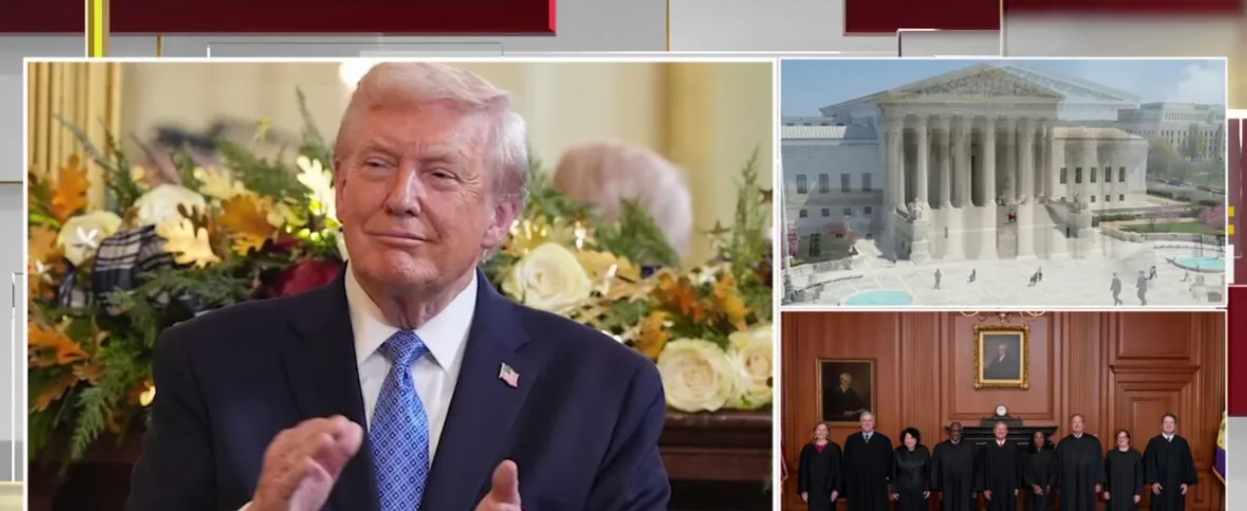
In a rare public rebuke, Supreme Court Justice Samuel Alito sharply criticized his fellow justices after the Court temporarily blocked President Donald Trump’s plan to deploy National Guard forces to the Chicago area. Alito called the decision by the majority “unwise” and questioned the legal reasoning behind halting the deployment, suggesting it could hinder the federal government’s ability to protect its personnel during periods of unrest. Fox News+1
The dispute originated from the Trump administration’s effort to federalize roughly 300 National Guard members to assist in protecting Immigration and Customs Enforcement (ICE) officers and other federal workers amid protests near a Chicago immigration facility. According to the administration, these actions were necessary because local authorities were not adequately addressing threats against federal employees. Fox News
However, a federal judge in Illinois initially blocked the deployment, finding that Trump had not shown a legal basis for using the Guard under the relevant federal statute, which allows such force only when the president is “unable with the regular forces to execute the laws of the United States.” The Supreme Court majority upheld this lower court order, agreeing that the administration failed to demonstrate the necessary authority. SCOTUSblog
In his dissent, Alito argued that the majority was wrong to adopt a last-minute interpretation of what “regular forces” means and that the Court showed insufficient deference to the president’s judgment about threats facing federal officers. He rejected the majority’s emphasis on the Posse Comitatus Act, which generally limits the use of the military for domestic law enforcement, saying that the Constitution allows the president to deploy troops for a variety of domestic purposes, including the protection of federal personnel. Bloomberg Law
Justice Clarence Thomas joined Alito’s dissent, and Justice Neil Gorsuch also wrote separately opposing the majority’s decision. Meanwhile, Justice Brett Kavanaugh supported blocking the deployment but suggested a narrower rationale. AP News
This ruling represents a notable legal setback for President Trump in a broader series of court battles over his administration’s use of military and National Guard forces in domestic settings. Similar challenges are underway in other cities, including Portland and Los Angeles, where courts have also scrutinized federal troop deployments. AP News