Many American households are reporting financial strain as living costs rise.
A recent national survey reveals that a growing number of American voters are feeling financially squeezed by rising prices, and overall confidence in the economy is weakening. The findings show that many voters believe their household budgets are under pressure as the cost of essential goods and services continues to escalate.
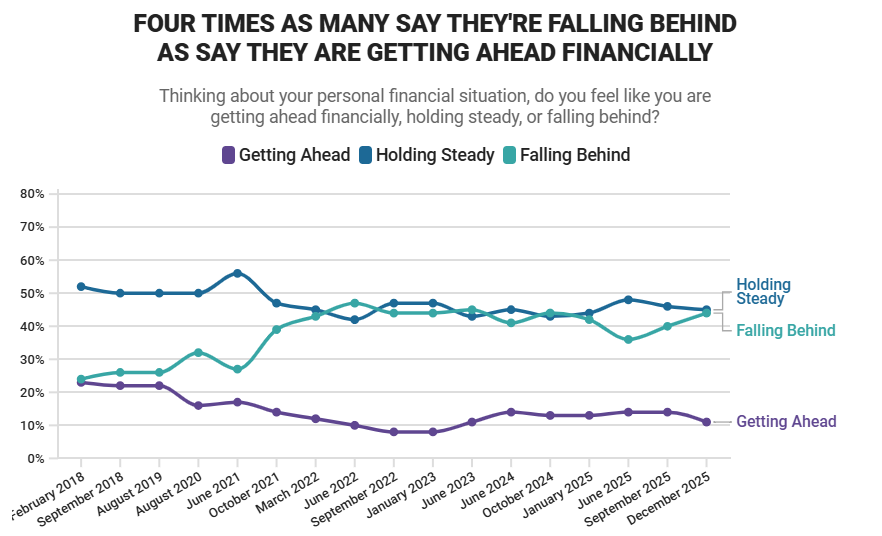
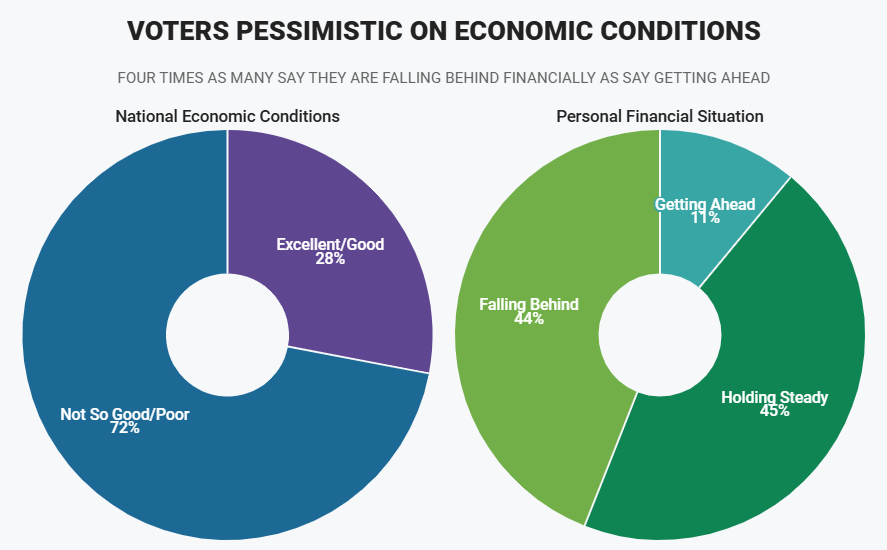
According to the survey results, a significant majority of participants rated the current economic conditions as negative, citing high prices for food, gas, housing, and other basics as a central concern. More than four out of every ten respondents reported that they feel they are falling behind financially compared with earlier in the year. This sense of financial strain was higher than in many previous surveys, indicating that affordability continues to be a top issue for voters.
The decline in economic confidence spans a wide range of demographic groups. While dissatisfaction was especially pronounced among younger voters, lower-income households, and those without college degrees, respondents across diverse backgrounds expressed concerns about the rising cost of living. A notable portion of independents and even some supporters of the current administration acknowledged that prices for everyday items are placing significant pressure on their family budgets.
Economic Concerns Dominate Voter Priorities
The survey results also pointed to a shift in voter priorities. High prices and inflation emerged as the most pressing issues, with many respondents ranking them above other topics such as immigration and foreign policy. Concerns about healthcare costs and job security also featured prominently among the economic challenges cited by voters.
Participants in the poll underscored that recent trends in grocery pricing, energy costs, and housing expenses have directly impacted their ability to save or plan for the future. Several groups reported that they have cut back on discretionary spending, postponed major purchases, or reduced savings to cope with rising outlays on essentials.
The growing sense of economic unease has implications for political leaders and policymakers, who may face increased pressure to respond to public concerns about affordability and financial stability. Observers note that when voters feel their personal finances are under strain, it often influences their views on leadership and economic policy direction.
Outlook for Consumer Confidence
Economists tracking consumer sentiment say that while inflation rates have eased compared with earlier peaks, the relief has not yet translated into financial comfort for many households. Persistent affordability challenges mean that confidence in the economy remains fragile, even as some macroeconomic indicators show moderation in price growth.
With economic confidence lagging and price pressures still resonating with households nationwide, the public’s outlook on financial stability appears cautious at best. Voters are watching closely how policymakers and government officials address the cost-of-living squeeze and whether meaningful relief measures will emerge.
As the economy continues to evolve, monitoring how voters perceive their financial circumstances will remain a key barometer of public sentiment and political climate.