The U.S. labor market showed some positive job creation in November, though broader economic indicators remain mixed.
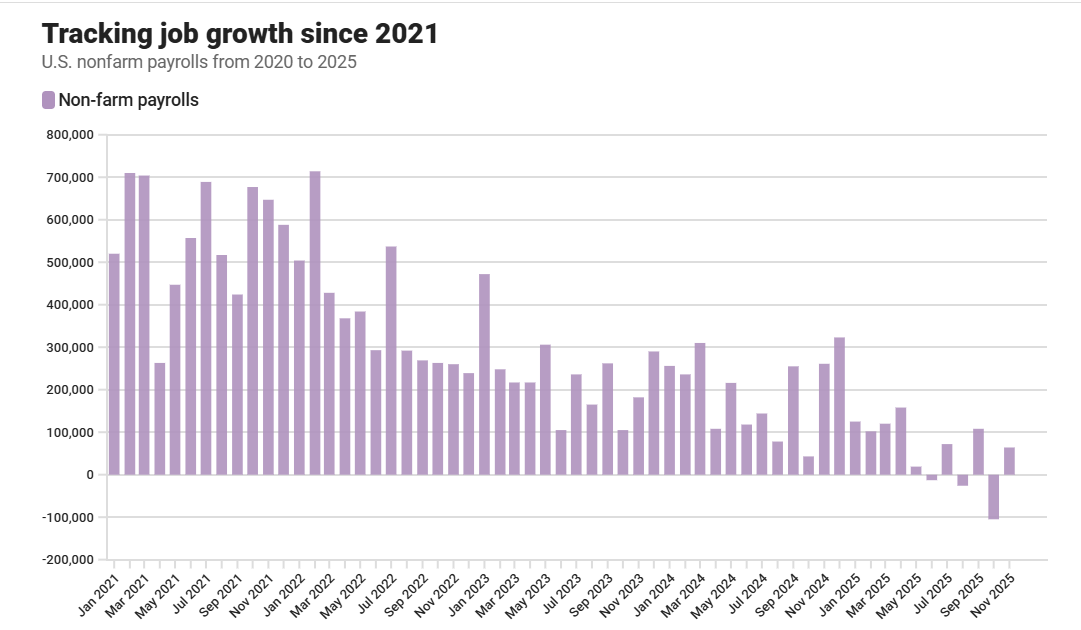
The United States economy added 64,000 jobs in November, surpassing many economists’ predictions and signaling a modest rebound in hiring following a significant decline earlier in the fall. The latest data, released by government labor officials, shows that employers across the country hired more workers than expected, though other measures suggest ongoing challenges in the job market.
Last month’s job gains came after a sharp loss of 105,000 jobs in October, largely attributed to reductions in federal government employment. The rebound in November helped offset some of that earlier weakness, but the labor market’s underlying strength remains a subject of debate among analysts and policymakers. Joint Economic Committee
Unemployment Rate Creeps Higher
Despite the increase in payrolls, the unemployment rate rose to 4.6 percent in November, marking the highest level in several years. This figure reflects broader softness in the labor market and points to persistent challenges for job seekers and employers alike. Many analysts note that while job creation continues, it is not occurring at a pace strong enough to significantly reduce unemployment. Facebook
Economists also caution that the labor market statistics are influenced by unusual conditions earlier in the year, including a prolonged federal government shutdown that disrupted data collection and reporting. These disruptions complicate efforts to interpret trends and may have affected the timing and measurement of the latest figures. Facebook
Sector Performance and Job Trends
Private sector hiring helped drive the overall gains in November, with industries such as healthcare, construction, and service sectors contributing significantly to the increase in employment. Meanwhile, some areas such as federal government roles saw further contraction, reflecting broader workforce shifts and ongoing budgetary adjustments.
Industry observers point out that while the headline jobs number exceeded expectations, the combination of slower growth and rising unemployment suggests that many employers are proceeding cautiously in their hiring plans. Several businesses have cited economic uncertainty, higher operating costs, and slower demand as factors influencing their labor decisions.
Economists Weigh In
Economists tracking the labor market describe the November report as a mix of positive and concerning indicators. On the one hand, the fact that job gains outpaced forecasts offers a sign of resilience in parts of the economy. On the other hand, the elevated unemployment rate and modest pace of hiring point to lingering challenges that could shape economic policy in the coming months.
Some analysts argue that the Federal Reserve and other policymakers may need to consider these mixed signals as they evaluate interest rate policy and other measures aimed at supporting employment and economic growth.
What This Means for Americans
For many workers, the jobs report offers a mixed picture. While new positions are being created, especially in sectors like healthcare and construction, the higher unemployment rate reflects continued competition for available work and uncertainty about future prospects. As economic conditions evolve, job seekers and employers alike will be watching labor market trends closely to gauge the broader direction of the U.S. economy.