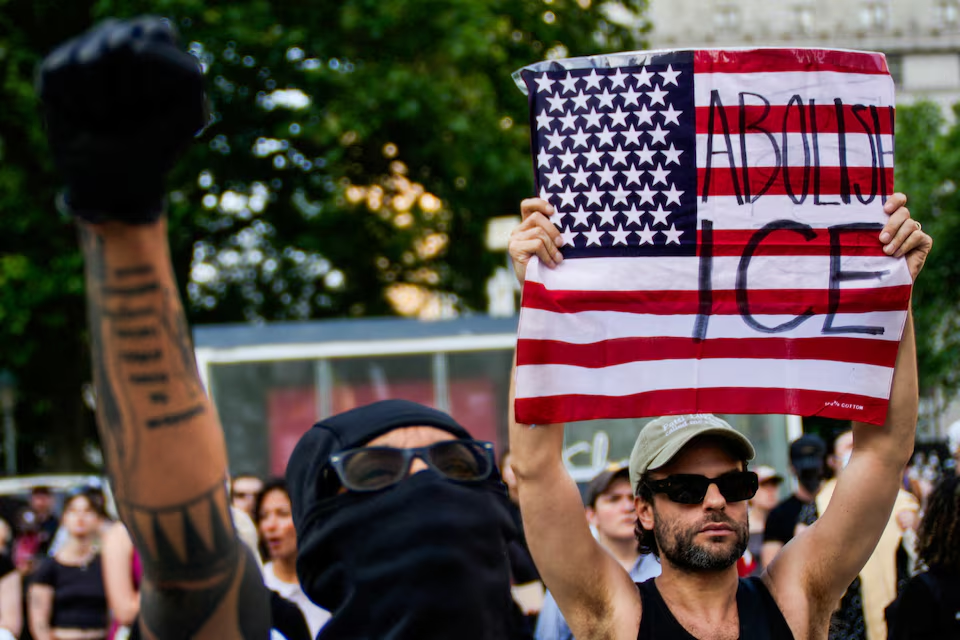
Demonstrators march in a major city against federal immigration enforcement policies.
Across the United States, demonstrations against federal immigration policies have continued to spread, drawing thousands of protesters in cities large and small. Events that began earlier in the year in major metropolitan areas have grown into a broader movement, reflecting deep divisions over immigration enforcement and government policy.
Protests have taken place in Southern California, the Southwest, the Midwest, and other regions, with residents, community groups, and immigrant rights advocates taking to the streets to voice their opposition to deportation raids, family separations, and broad enforcement tactics. The wave of demonstrations has been among the most visible domestic responses to immigration policy in recent years.
In Southern California, crowds gathered in downtown public spaces to denounce workplace raids and mass detentions by federal immigration authorities. Many participants carried banners, chanted slogans and called for structural reforms to the nation’s immigration system. Local activists emphasized the contributions of immigrant workers to regional economies, while also criticizing what they described as heavy-handed enforcement tactics.
Similar protests emerged in other cities across the country. In parts of the Pacific Northwest, demonstrators gathered outside federal facilities to decry increased Immigration and Customs Enforcement operations and the expanded use of state National Guard forces. In Texas, thousands marched in urban centers to condemn deportation actions and highlight the human impact of enforcement policies on families and communities. Activists stressed the need for humane treatment and due process protections for those affected by immigration measures.
Many of the nationwide demonstrations were coordinated under broader campaigns organized by advocacy networks, faith groups, and civic organizations. These groups held marches, vigils, and rallies that often emphasized solidarity with immigrant communities and called on policymakers to consider alternatives to aggressive enforcement strategies.
One notable event saw large crowds rally in central plazas, where advocates spoke about the personal toll of deportations on families and urged lawmakers to pursue comprehensive immigration reform. Participants said the protests were aimed at drawing attention to the consequences of current policy decisions and amplifying voices that too often go unheard in national debates.
Officials have responded in various ways. In some locales, law enforcement agencies have worked to ensure that demonstrations remain peaceful while balancing public safety concerns. Elected leaders in several cities have reaffirmed the constitutional rights of citizens to assemble and express dissent, even as they navigate the complexities of maintaining order during large gatherings.
Political analysts note that the persistence and scale of these protests underscore deep public engagement with immigration policy outcomes. The demonstrations reflect broader anxieties over enforcement priorities, the treatment of undocumented residents, and the role of federal authority in local communities.
As the national conversation around immigration continues, these protests highlight the ongoing debate over how the United States should shape its policies on borders, citizenship, and the treatment of vulnerable populations. The visibility of these events, and the diversity of participants across geographic regions, points to immigration as a defining issue in contemporary American politics.